Peptide fundamentals
KPV and Gut Inflammation: What the Research Shows
Explore KPV's encouraging intestinal research, how PepT1 and targeted delivery work, and what to check when interpreting capsule claims.
In this article
What is KPV, and why is it studied for gut inflammation?
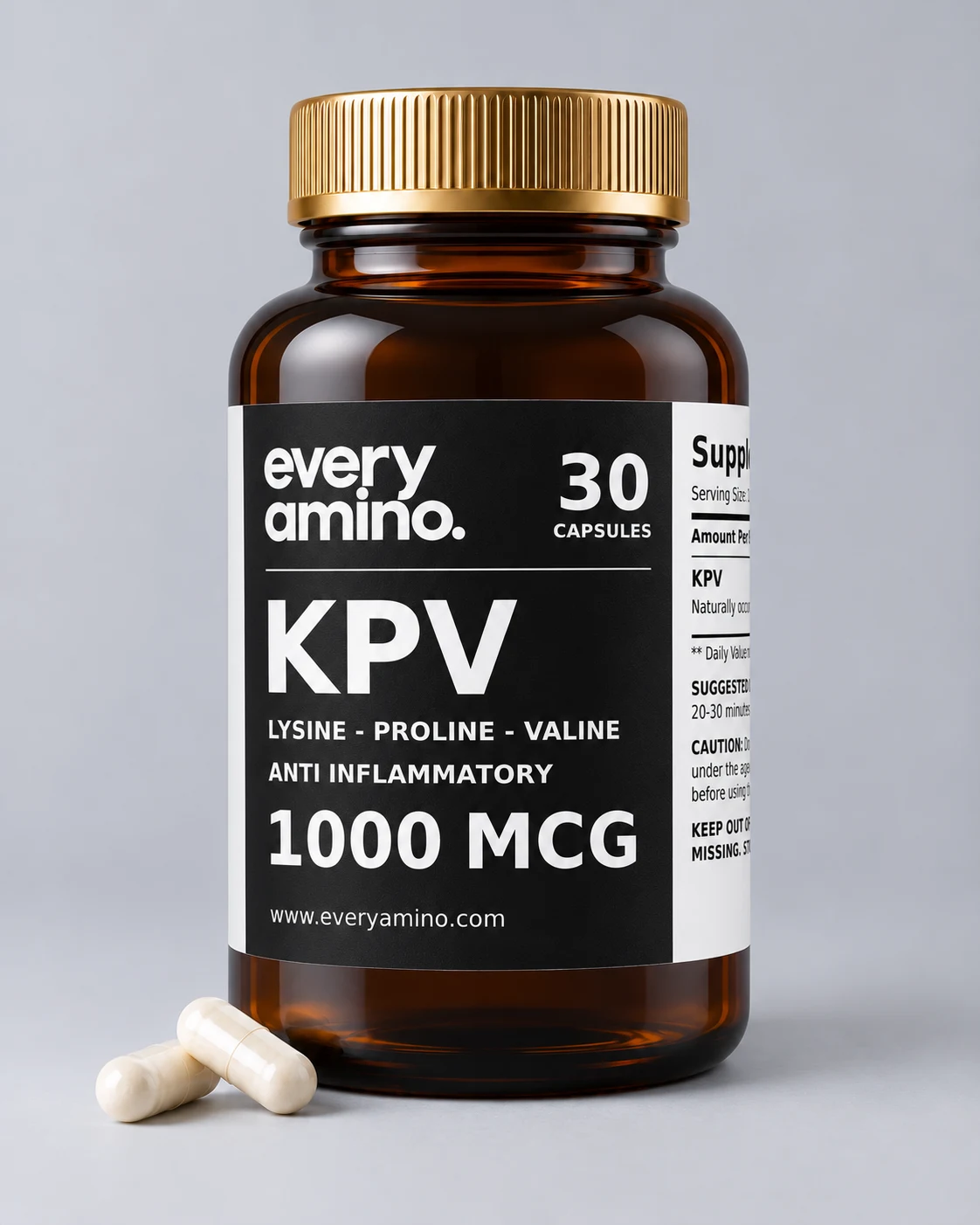
KPV is a three-amino-acid peptide made from lysine, proline and valine. Researchers study it because experiments have shown reduced inflammatory signalling in intestinal cells and improvements in mouse models of colitis. Its appeal combines a small molecular structure, measurable biological activity and opportunities for targeted delivery. [1–4]
The useful question is how those results were obtained. A cell experiment, an animal study and a finished capsule answer different questions. This guide explains the encouraging findings and the details that make them meaningful. Sources were checked on 9 November 2026.
What does the name KPV mean?
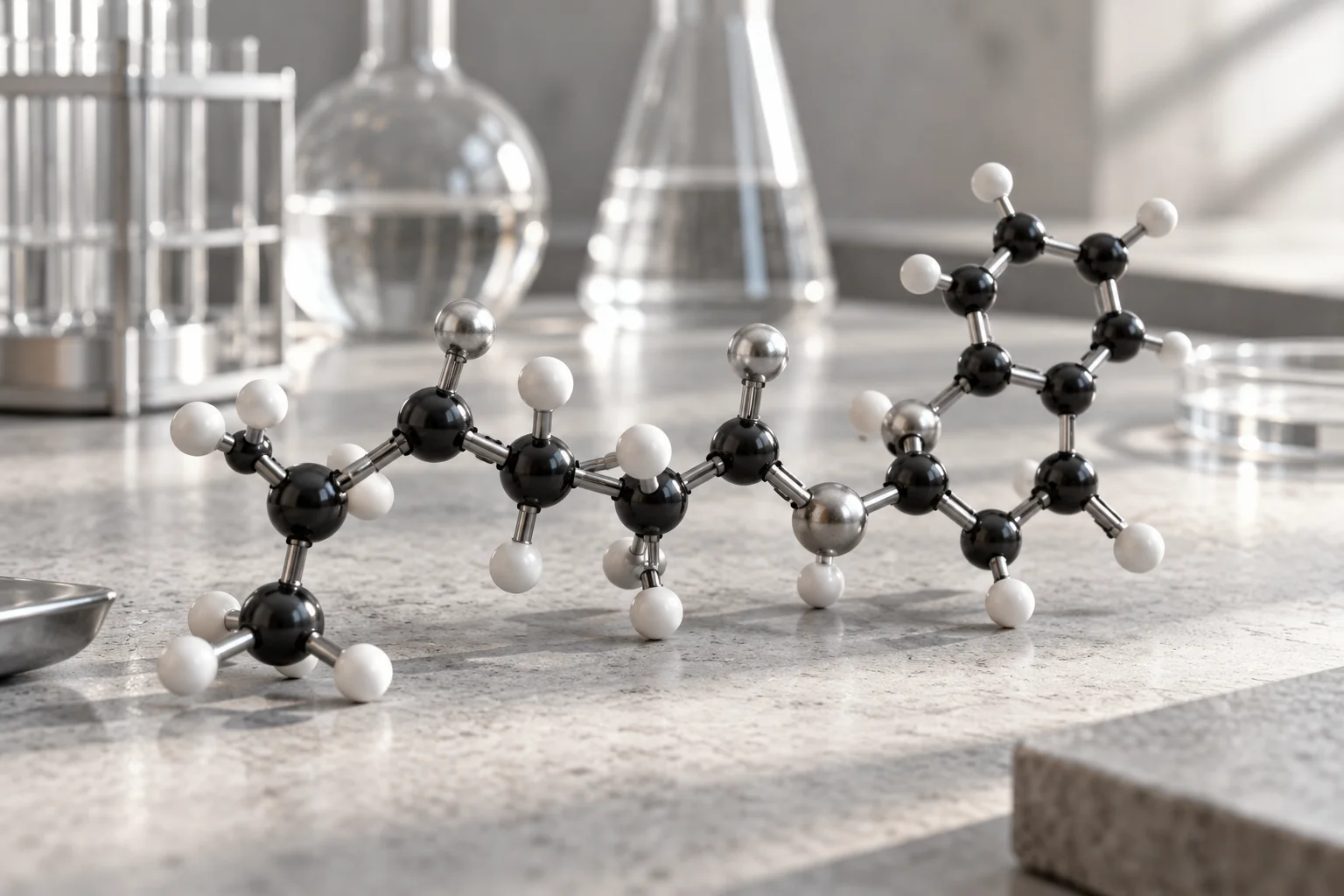
The letters identify the amino acids in sequence: K is lysine, P is proline and V is valine. Three linked amino acids make a tripeptide. KPV corresponds to the final three amino acids of alpha-melanocyte-stimulating hormone, usually shortened to alpha-MSH. [1,2]
That compact structure makes KPV an interesting subject for research into how small peptides influence cellular responses. It also makes precise naming important: a study of KPV is not automatically a study of every related peptide or commercial blend.
If peptide terminology is new to you, start with our guide to amino acids and peptide sequences.
What did the PepT1 study show?
A study published in Gastroenterology in 2008 linked KPV's activity to PepT1, a transporter that carries small peptides into cells. Researchers examined intestinal epithelial cell lines and immune cells, then investigated two mouse models of colitis. [1]
They reported reduced activation of NF-kappaB and MAP kinase signalling pathways, together with reduced release of inflammatory cytokines. The experiments supported a role for PepT1 in moving KPV into the cells. This supplied a possible explanation for the observed activity, rather than simply reporting that an inflammation marker changed. [1]
“Human cells” in this paper means cells studied in a laboratory. It does not mean volunteers received KPV. Reading the methods section resolves that distinction quickly.
Did animal studies show meaningful improvements?
A separate research group investigated KPV in two models of intestinal inflammation in mice. The researchers assessed body-weight changes, colon tissue and myeloperoxidase activity, a measure associated with inflammatory cells. KPV-treated animals showed encouraging recovery-related changes across these measures. [2]
Reported findings included earlier recovery and stronger weight regain in one model, alongside fewer inflammatory infiltrates in colon tissue. Another model also showed recovery, weight regain and improved tissue findings. Looking at several outcomes helps researchers assess whether a signal is consistent across different measures. [2]
These results explain the interest in KPV as a candidate for further investigation. They describe experimental colitis in mice; everyday bloating and diagnosed inflammatory bowel disease in people require their own clinical assessment.
Why does delivery receive so much attention?
Delivery determines where a material goes and when it becomes available. In a colon-targeting study, researchers enclosed KPV inside nanoparticles and then placed those particles within an alginate-and-chitosan hydrogel. The aim was to bring the peptide closer to the inflamed tissue. [3]
The work included cell experiments and a mouse colitis model. The researchers reported reduced inflammatory responses in cells and protection against inflammatory and tissue changes in mice. The formulation was part of the experiment, not simply an interchangeable container around the peptide. [3]
This is an important reading habit for anyone exploring oral peptides. Record the complete delivery system beside the compound name. A plain capsule, a hydrogel and a specially engineered nanoparticle should remain separate entries in your notes.
What did the later nanoparticle study add?
A 2017 study developed KPV-loaded nanoparticles functionalized with hyaluronic acid. The particles averaged approximately 272 nanometres and were designed to target colonic epithelial cells and macrophages. Researchers then evaluated a hydrogel containing the particles in a mouse model. [4]
They reported benefits involving mucosal healing and inflammatory measures. The targeted formulation performed better than the comparison nanoparticle-and-hydrogel system on several outcomes. This work illustrates how formulation research can build on an earlier biological finding. [4]
The study's hyaluronic acid was part of an experimental delivery design. The paper concerns intestinal research, rather than a skincare product or a recommendation to combine ingredients yourself.
What should you check when reading a KPV claim?
Use a short checklist before interpreting a headline:
- Material: Was the experiment about KPV alone, a blend or a carrier containing another drug?
- Setting: Were the subjects cells, mice or people?
- Delivery: Was the peptide free in solution or enclosed in an engineered system?
- Outcome: Did researchers measure signalling, tissue appearance, symptoms or another endpoint?
- Comparison: What was the control group, and what changed besides KPV?
Write a one-sentence description using those details. For example, “The study examined an engineered KPV formulation in mouse colitis and measured tissue inflammation.” That sentence is more informative than a broad claim about gut health.
For help comparing study designs, see our guide to reading peptide research.
How does this translate to human use?
The studies above establish a preclinical research rationale. Human treatment decisions require clinical evidence addressing benefits, safety and the actual formulation. FDA's 2026 review of KPV reported that it had not identified clinical studies or human exposure data sufficient to establish those questions. KPV should therefore be understood as investigational, rather than an established gut treatment. [5]
Persistent digestive symptoms deserve assessment rather than assuming they share the cause studied in a mouse experiment. A clinician can help identify the condition and discuss treatments supported for that diagnosis.
Frequently asked questions
Does a KPV capsule reproduce the nanoparticle studies?
The name alone cannot establish that. The papers used specifically engineered delivery systems. Matching the peptide name or labelled quantity does not demonstrate matching delivery or clinical performance. [3,4]
How quickly should someone expect a result?
These studies do not establish a dependable human response timeline. Experimental observation periods describe the research design, not a countdown for symptom relief.
What is the most encouraging finding?
Several preclinical studies connect KPV with reduced intestinal inflammation. The work also offers testable ideas about cell uptake and targeted delivery. Those concrete findings provide a useful foundation for the next stage of research. [1–4]
Sources & further reading
- Dalmasso et al. PepT1-mediated tripeptide KPV uptake reduces intestinal inflammation (2008)
- Melanocortin-derived tripeptide KPV has anti-inflammatory potential in murine models of inflammatory bowel disease
- Drug-loaded nanoparticles targeted to the colon with polysaccharide hydrogel reduce colitis in a mouse model
- Xiao et al. Orally targeted delivery of KPV via hyaluronic acid-functionalized nanoparticles (2017)
- FDA 2026 review: KPV free base and KPV acetate
For education. Discuss treatment and recovery decisions with a qualified clinician.
Related catalogue listings
These links describe the listed presentations and prices; they do not establish equivalence to products used in a study.
Keep exploring
What Are Peptides? Amino Acids, Sequences and Research →
BPC-157 Recovery Timeline: What the Evidence Shows →
Peptide Storage and Handling: A Practical Research Checklist →